West Hollywood Building Performance Program: What Building Owners Need to Know

The City of West Hollywood has adopted Equitable Building Performance Standards (EBPS) aimed at improving the energy performance of existing buildings and reducing greenhouse gas emissions.
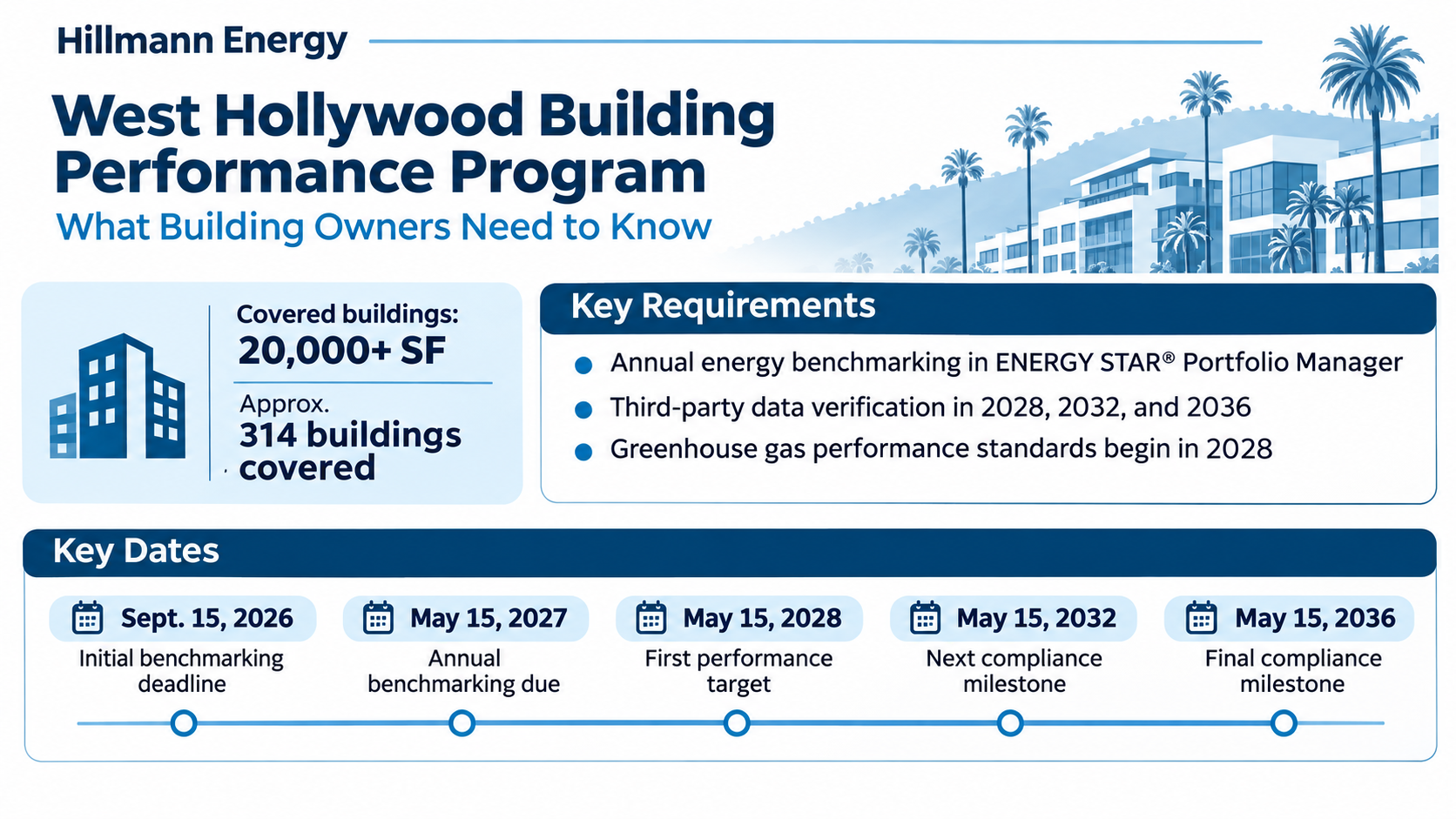
The West Hollywood Building Performance Program generally applies to existing buildings 20,000 square feet or larger and establishes two primary requirements: annual energy benchmarking and progressively stricter greenhouse gas performance standards. Approximately 314 buildings are currently covered by the program. Property owners can review the City of West Hollywood’s current Covered Buildings List to confirm whether a property is included.
For building owners and portfolio managers, the key takeaway is important: compliance is not limited to reporting energy use. Over time, most covered properties must also meet applicable greenhouse gas emissions targets or follow an approved compliance pathway.
Annual Energy Benchmarking Requirements
Covered buildings must report whole-building energy use annually through ENERGY STAR® Portfolio Manager.
The City established a September 15, 2026 deadline for the initial reporting cycle. Beginning in 2027, annual benchmarking reports are due May 15.
Third-party data verification is also required during specified compliance years, including 2028, 2032, and 2036.
Benchmarking provides the performance data owners need to understand current energy use, identify trends, and evaluate how a property is progressing toward future compliance requirements.
Building Performance Standards Begin in 2028
Beginning in 2028, most covered buildings must meet greenhouse gas performance targets based on property type.
The City has established progressive compliance milestones for:
- May 15, 2028
- May 15, 2032
- May 15, 2036
The standards become increasingly stringent over time as West Hollywood works toward reducing greenhouse gas emissions from its existing building stock.
Residential condominium buildings are generally required to complete annual benchmarking but are not subject to the building performance standards.
Noncompliance Can Be Costly
Building owners should also be aware that failure to comply may result in significant financial penalties.
Penalties may include $1,000 for failure to complete required benchmarking and substantial additional penalties for properties that do not meet applicable building performance requirements.
For owners of larger properties, the potential financial exposure makes early performance evaluation and compliance planning particularly important.
What If a Building Does Not Meet the Target?
Buildings that cannot meet an interim performance target may qualify to pursue a Building Performance Action Plan (BPAP) pathway.
This alternative compliance approach allows an owner to develop a plan identifying how the property will improve its energy systems and work toward future performance requirements.
That makes early assessment especially valuable. Owners who understand current energy use, greenhouse gas performance, and building system deficiencies have more time to evaluate operational changes, retro-commissioning, capital improvements, incentives, and other strategies.
How Hillmann Energy Can Help
Hillmann Energy works with commercial building owners and portfolio managers to evaluate performance, identify inefficiencies, and develop practical improvement strategies.
Services that may support West Hollywood Building Performance Program compliance include:
- Energy Benchmarking & Performance Tracking
Establish energy-use baselines, evaluate performance trends, and support ENERGY STAR Portfolio Manager reporting. - Energy Audits & Assessments
ASHRAE Level 1, 2, and 3 energy audits can identify inefficiencies, energy conservation measures, and opportunities to reduce consumption and operating costs. - Retro-Commissioning (RCx)
Evaluate existing building systems to identify operational deficiencies and opportunities to improve energy efficiency, system performance, and occupant comfort. - Measurement & Verification
Evaluate energy savings and verify whether implemented conservation measures are producing anticipated results. - Energy Improvement & Capital Planning
Translate technical findings into prioritized improvement strategies that account for building needs, compliance requirements, available resources, and long-term capital plans.
Frequently Asked Questions
Which buildings are generally covered by West Hollywood’s program?
The program generally applies to existing buildings 20,000 square feet or larger, although specific requirements may vary by property type.
Is annual benchmarking enough to comply?
No. Benchmarking is one part of the program. Most covered properties will also need to meet applicable greenhouse gas performance targets beginning in 2028 or pursue an approved compliance pathway.
What should an owner do if a building is not currently meeting the target?
Early evaluation can help identify operational deficiencies, energy conservation opportunities, and capital improvements. Some buildings may also qualify for a Building Performance Action Plan pathway.
Which one is right for my building – an energy audit or retro-commissioning?
We can evaluate this with you on a case by case basis – just contact us! But in general, older buildings or those with aging energy using equipment will benefit more from an energy audit. Larger buildings with newer, but not necessarily optimized, equipment and central building automation systems will benefit more from an RCx study.
When should I have an energy audit or retro-commissioning assessment of my property?
With the first performance year of 2028 fast approaching, the time to plan for improvements is NOW! An energy audit or retro-commissioning (RCx) is the best way to plan ahead and map a pathway to achieve energy savings. Even if you have the assessment done now, building owners still need time to implement the recommendations, which are best put in place before January 2028 when the performance year begins.
Start Planning Before the Deadline
West Hollywood’s building performance requirements are designed to become more stringent over time. Owners who begin benchmarking, evaluating greenhouse gas performance, and identifying potential improvements early may be better positioned to address future requirements strategically rather than reactively.
Early action provides more time to prioritize lower-cost operational improvements, evaluate larger capital projects, identify incentives, and incorporate compliance needs into long-term building plans.
Hillmann Energy can help building owners understand current performance and develop practical next steps for energy efficiency, building optimization, and compliance planning.
-

-
-

Commercial Real Estate Consulting Services
February 2, 2026
-

Philadelphia Building Energy Performance Program (BEPP)
January 28, 2026
-